
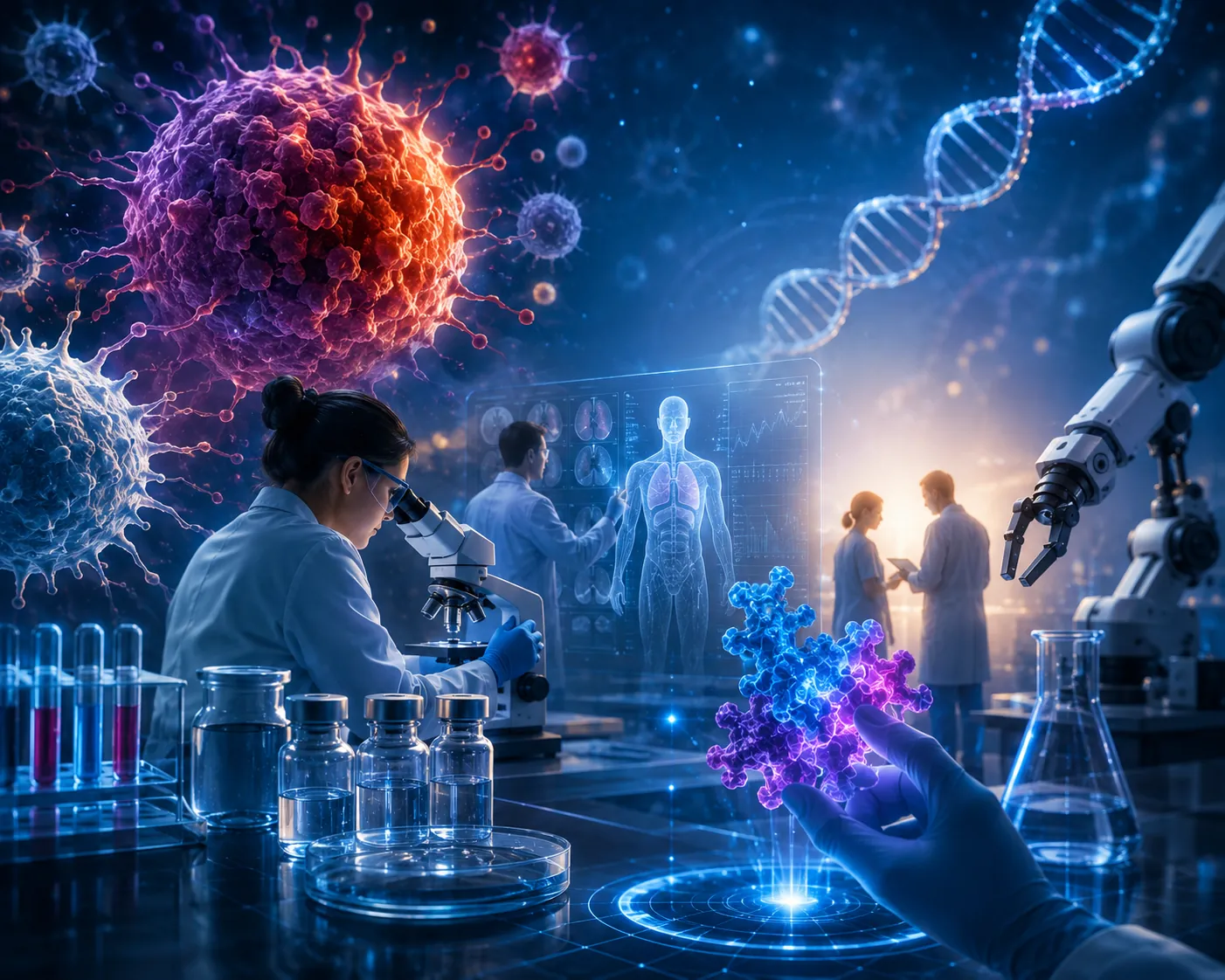
Cancer remains one of the most significant health challenges in the world. According to the World Health Organization, it is responsible for nearly 10 million deaths per year globally. But the last two years have seen a remarkable acceleration in research, driven partly by technology developed during the COVID-19 pandemic and partly by decades of accumulated science finally reaching clinical results.
This article covers the most significant, verified cancer breakthroughs from 2025 and what researchers at leading institutions expect to develop further through 2026 and beyond. These are not speculative headlines, they are supported by published clinical trial data, FDA approvals, and statements from institutions including the American Association for Cancer Research (AACR), Dana-Farber Cancer Institute, and Memorial Sloan Kettering Cancer Center.
1. mRNA Cancer Vaccines: The Biggest Story in Oncology
The same mRNA technology that produced COVID-19 vaccines in record time is now being turned against cancer, and the early results are genuinely remarkable.
The most advanced programme is mRNA-4157 (also called V940), a personalised mRNA cancer vaccine developed jointly by Moderna and Merck. The vaccine is custom-built for each individual patient: scientists sequence the patient's tumour, identify mutations unique to that cancer, and design an mRNA vaccine that trains the immune system to recognise and attack those specific cancer cells.
In Phase 2 clinical trials for melanoma (skin cancer), patients who received mRNA-4157 combined with pembrolizumab (an existing checkpoint inhibitor immunotherapy) showed a 44% reduction in the risk of cancer recurrence compared to patients who received pembrolizumab alone. Three-year follow-up data shows that the benefit is sustained over time, not just a short-term effect. Regulatory submissions for mRNA-4157 are expected in 2026, which could lead to the first approved mRNA cancer vaccine.
In pancreatic cancer, one of the deadliest and hardest-to-treat cancers, a personalised mRNA vaccine developed by Memorial Sloan Kettering and BioNTech showed vaccine-induced immune responses persisting for nearly four years in some patients, with a reduced rate of cancer recurrence at three-year follow-up. Pancreatic cancer has historically had a five-year survival rate below 12%, making these results particularly significant.
As of 2026, over 120 mRNA cancer vaccine clinical trials are underway across multiple cancer types. LungVax, a vaccine targeting lung cancer, is being trialled in 2026 on 3,000 high-risk participants aged 55 to 74. Industry analysts project the first mRNA cancer vaccines could receive full regulatory approval in late 2026 or 2027.
2. CAR-T Cell Therapy: Engineering the Immune System
CAR-T (Chimeric Antigen Receptor T-cell) therapy is a form of treatment where a patient's own immune cells are extracted, genetically engineered in a laboratory to recognise cancer cells, and then infused back into the body to hunt and destroy the tumour.
The results in blood cancers have been transformative. CAR-T therapy achieves up to 80% remission rates in certain types of lymphoma. Approximately 30% of patients with advanced blood cancers, including those who had failed multiple prior treatments, are seeing long-term benefits. In 2025, the FDA approved seven new CAR-T based treatments, bringing the total number of FDA-approved CAR-T therapies to more than a dozen.
A particularly exciting emerging approach is in vivo CAR-T therapy, instead of removing cells from the body, modifying them in a lab, and reinfusing them (a complex and expensive process), in vivo CAR-T delivers gene-editing instructions directly into the patient's body to reprogram immune cells where they live. This approach could dramatically reduce cost and complexity, making the therapy accessible to far more patients globally.
3. Breast Cancer: Pembrolizumab Confirmed as Standard Treatment
Triple-negative breast cancer is one of the most aggressive forms of the disease, disproportionately affecting younger women and those of African descent. It has historically had limited treatment options compared to hormone-receptor-positive cancers.
In 2025, pembrolizumab (an immunotherapy that works by removing the "brakes" from the immune system, allowing it to attack cancer) combined with chemotherapy was confirmed as the standard first-line treatment for advanced triple-negative breast cancer. Clinical trials showed a 27% reduction in the risk of death compared to chemotherapy alone. This is now considered a major step forward in treating one of the hardest-to-treat cancers.
4. Radiopharmaceuticals: Targeted Radiation From Inside the Body
Traditional radiation therapy directs beams of radiation at a tumour from outside the body. Radiopharmaceuticals work differently, they are radioactive compounds attached to molecules that seek out specific cancer cells, delivering radiation directly to the tumour from within.
A new generation of radiopharmaceuticals using alpha-emitting radioactive isotopes, particularly actinium-225 (Ac-225), is showing strong early results. Alpha emitters release large amounts of energy over very short distances, killing cancer cells precisely while causing minimal damage to surrounding healthy tissue. Several clinical trials for prostate cancer, neuroendocrine tumours, and other solid cancers are advancing rapidly in 2026.
5. Menin Inhibitors: A Breakthrough for Leukaemia
Acute myeloid leukaemia (AML) is one of the most dangerous blood cancers, with a five-year survival rate of around 30% for adults. In 2025, two new targeted therapies called menin inhibitors received FDA approval for treating approximately 40% of AML cases, those with specific genetic mutations (NPM1 mutations or KMT2A rearrangements) that make the cancer particularly dependent on a protein called menin.
Menin inhibitors directly block this protein, causing cancer cells to stop proliferating or to mature into normal blood cells. For patients with these specific genetic profiles, the results in clinical trials were striking, response rates in patients who had previously failed multiple treatments.
6. Liquid Biopsy: Detecting Cancer From a Blood Test
One of the most significant long-term shifts in oncology is not a new treatment, it is a new way of finding cancer before it becomes dangerous. Liquid biopsy is a blood test that detects tiny fragments of tumour DNA circulating in the bloodstream, allowing doctors to identify cancer at a very early stage, sometimes years before it would show up on a scan.
In 2025, liquid biopsy technology advanced significantly. Tests can now detect signals for multiple cancer types from a single blood draw. Researchers at major cancer centres are forecasting that widespread liquid biopsy screening could, within a decade, transform cancer from a disease that is often found late, when it is hardest to treat, to one that is caught early, when survival rates are dramatically higher.
7. Artificial Intelligence Accelerating Drug Discovery
Beyond individual treatments, artificial intelligence is reshaping how cancer drugs are discovered and developed. AI systems can analyse vast datasets of molecular structures, clinical trial results, and patient outcomes to identify promising drug candidates far faster than traditional research methods.
In 2025 and 2026, AI tools are being used across every major cancer research institution to predict which patients will respond to which treatments, to identify new drug targets, and to design clinical trials more efficiently. The AACR has identified AI as one of the key forces accelerating the pace of oncology progress, compressing timelines that once took decades into years.
What This Means for Patients Today
For most people, the honest answer is: these advances are real and meaningful, but many are still in clinical trials or early approval stages. They are not yet widely available in every hospital in every country. Access to cutting-edge treatments remains highly unequal globally, concentrated in high-income countries with advanced oncology centres.
What the science of 2025 and 2026 does tell us clearly is that the trajectory is strongly positive. The combination of mRNA technology, precision immunotherapy, AI-driven research, and early detection tools represents a genuinely new era in cancer medicine. The researchers approaching 2026 are more optimistic than at any previous point in the history of oncology.
The goal of making cancer a manageable or curable condition, rather than a death sentence, looks more achievable today than it ever has before.
This article is for general information only and is not medical advice. Talk to a qualified health professional about your own situation.
Related Posts

Why Do We Get Goosebumps? The Science Behind It
Goosebumps happen when you are cold, scared, or moved by music. The answer reaches back millions of years into our evolutionary past, with a surprising recent discovery.

Why Do We Dream? What Science Actually Knows
We spend roughly six years of our lives dreaming. Scientists have been studying the question for over a century. Here is what they have actually found.

Comments
Loading comments…