
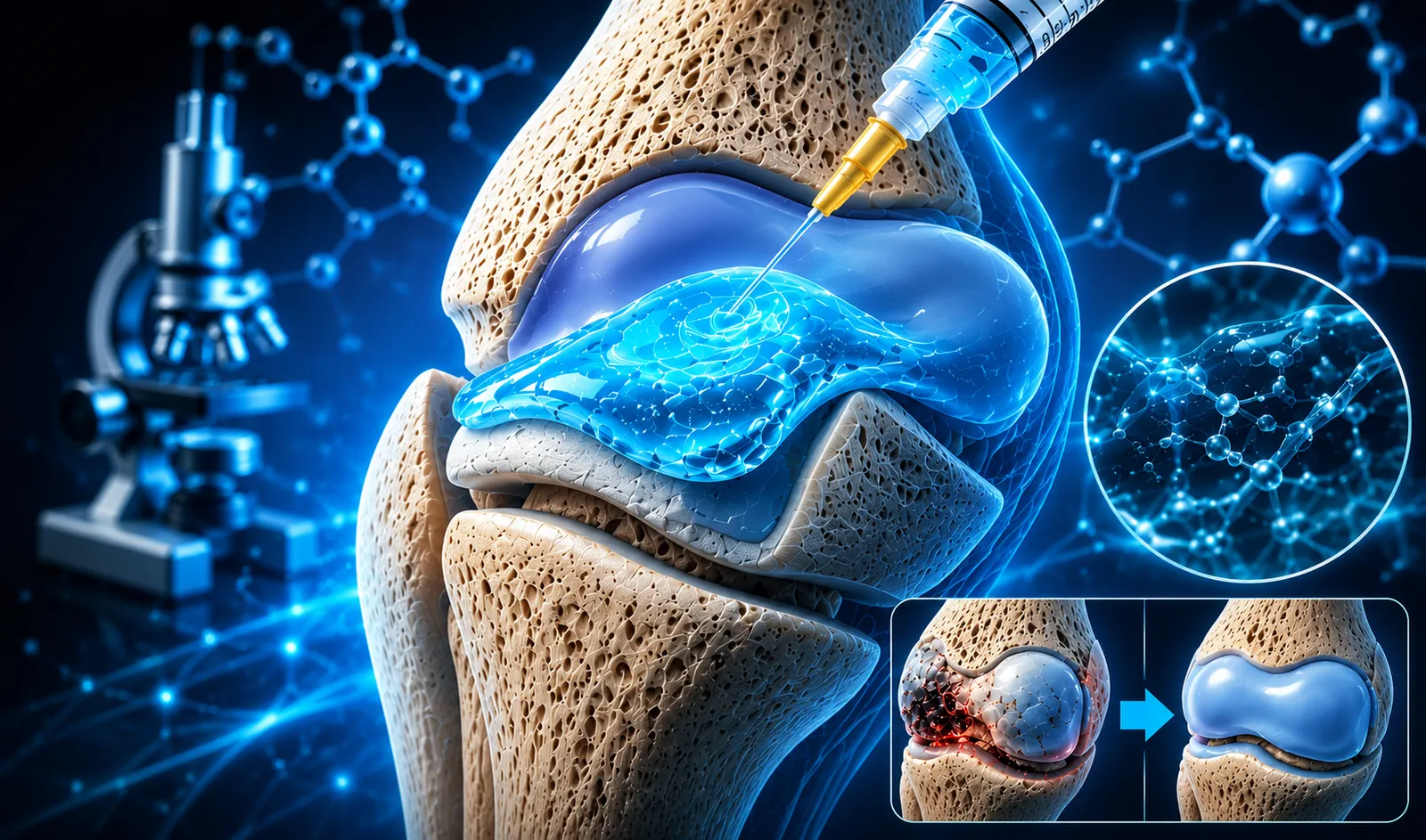
If you have ever had knee pain, hip pain, or been told your cartilage is "worn down," you already know how frustrating it is. Doctors usually say the same thing: rest, painkillers, maybe surgery one day. And once cartilage is gone, it is gone. The human body simply cannot grow it back on its own. That has been the medical reality for decades.
Until now. Researchers in Germany have developed a special gel that can actually help the body regenerate damaged cartilage, without any surgery, without implants, and without taking cartilage from another part of the body. It sounds almost too good to be true. But the science behind it is real, and the results so far have surprised even the scientists who built it.
What is cartilage and why does it matter so much?
Cartilage is the smooth, rubbery tissue that covers the ends of your bones where they meet at a joint. Think of it like a cushion between your bones. It stops them from grinding against each other when you walk, bend, or move. Without it, every step you take sends bone directly against bone, which causes pain, swelling, and eventually serious damage to the joint itself.
The problem is that cartilage has almost no blood supply. Most tissues in the body heal because blood carries the cells and nutrients needed to repair damage. Cartilage gets its nutrients from the fluid in the joint instead, which is much slower and far less effective. A small tear or scratch in cartilage often never heals at all. A larger injury, or years of wear and tear from conditions like osteoarthritis, leaves behind damage that the body simply cannot fix.
Osteoarthritis alone affects over 500 million people worldwide, according to the World Health Organization. It is one of the leading causes of disability globally, particularly in people over 50. The current options are pain management, physiotherapy, steroid injections, or eventually a joint replacement operation. None of them actually fix the cartilage. They just manage the symptoms while the damage continues.
What German scientists discovered
The research came out of work done in Germany involving a biomaterial gel designed to act as a kind of scaffold inside the joint. The idea is not entirely new, but what makes this gel different is how it works at the biological level.
The gel is injected directly into the damaged joint. Once inside, it fills the space where cartilage has been lost or damaged. But it does not just sit there passively. The gel is designed to attract the body's own stem cells, which are the building block cells that can turn into many different types of tissue. It creates the right environment for those stem cells to settle in and start producing new cartilage cells.
The key ingredient that makes this work is a molecule that mimics the natural signals the body uses to tell stem cells where to go and what to become. By recreating those signals inside the gel, the researchers essentially tricked the body into thinking it needed to grow new cartilage in that specific spot. And in laboratory tests and early animal studies, that is exactly what happened.
New cartilage tissue formed. The cells organised themselves properly. The mechanical properties of the new tissue, how well it could handle pressure and movement, were close to natural cartilage. This is the part that surprised the research team most, because previous attempts to grow cartilage in this way had produced tissue that was structurally weak and did not last under real physical conditions.
No surgery, no implants, no donor tissue
What makes this gel genuinely exciting is how simple the treatment process could eventually be. Previous cartilage repair techniques have required significant surgery. One common procedure called microfracture involves drilling small holes into the bone beneath the damaged cartilage to stimulate bleeding and healing, with mixed results. Another approach involves harvesting cartilage cells from a healthy part of the patient's own body, growing them in a lab, and then surgically implanting them back, which is expensive, time-consuming, and still involves an operation.
A third option involves artificial implants made from synthetic materials, which can improve function but do not feel or behave exactly like real cartilage and may need to be replaced over time.
The German gel bypasses all of this. The plan is for it to be administered as a simple injection, the same way a doctor might inject a steroid or a lubricating fluid into a joint today. The patient would not need general anaesthesia, would not spend days in a hospital, and would not face the long recovery period that follows joint surgery. For elderly patients or people who are not suitable for surgery due to other health conditions, this could be the first real treatment option available to them.
Who could benefit from this?
The list of people who could benefit from a working cartilage restoration treatment is enormous. Osteoarthritis patients are the most obvious group. Around the world, hundreds of millions of people are living with the daily pain and stiffness of osteoarthritis in their knees, hips, hands, and spine. Many of them are too young for a full joint replacement but too damaged to manage comfortably with painkillers alone.
Athletes are another major group. Sports injuries that damage cartilage, particularly in the knee, are one of the most common reasons professional and amateur athletes end their sporting careers early or face permanent pain later in life. A torn meniscus, damaged knee cartilage from a bad landing, or years of high-impact training can all leave athletes with joints that never fully recover. A gel that could genuinely restore that cartilage would be transformative for sports medicine.
Young people with cartilage injuries are also a significant group. Currently, a serious cartilage injury in your twenties or thirties is managed but never truly fixed. The damage sits there, slowly progressing toward arthritis as you age. A treatment that could reverse that damage early could mean the difference between a lifetime of joint problems and a full recovery.
Where is the research now?
It is important to be honest about where this treatment currently stands. The results that have been published so far come from laboratory studies and animal models. This is how all medical research begins, and the results in those settings are genuinely promising. But the path from animal studies to a treatment available at your local hospital involves several more stages.
The next step is clinical trials in human patients. These trials test whether the gel is safe in humans, whether it produces the same results seen in the lab, and whether the new cartilage it creates is strong and durable enough to hold up over months and years of normal joint use. Clinical trials typically happen in phases over several years, and even treatments that look very promising in early phases sometimes encounter unexpected problems later.
Regulatory approval from bodies like the European Medicines Agency and the US Food and Drug Administration adds more time to the process. Realistically, if the human trials go well and no major safety issues are found, a treatment like this could be available to patients within five to ten years. That is not tomorrow, but in the context of medical breakthroughs, it is relatively fast.
Why this is a bigger deal than most people realise
Joint pain is one of the most common and most undertreated conditions in the world. It is not glamorous in the way that cancer research or heart disease research is. It rarely makes major headlines. But it quietly affects the quality of life of hundreds of millions of people, limiting their mobility, their ability to work, their independence as they age, and their overall happiness.
For decades, the medical answer to cartilage damage has essentially been "manage it and wait." This gel is the first genuinely plausible route to actually fixing the problem rather than just managing it. That is why researchers who work in this area are paying close attention, and why this particular study has attracted significant interest from the wider medical community.
It is also part of a broader wave of regenerative medicine breakthroughs happening right now. Scientists are growing skin in labs, regrowing nerve tissue, and now potentially regrowing cartilage. The idea that the body can be prompted to rebuild what it has lost, using its own cells and the right biological signals, is one of the most exciting frontiers in modern medicine.
What to do right now if you have joint pain
If you are currently living with joint pain or cartilage damage, this research is genuinely hopeful news, but it is not a treatment you can access today. The most useful things you can do right now are: talk to your doctor about all the current options available for your specific situation, maintain a healthy weight to reduce load on damaged joints, stay as physically active as your pain allows since gentle movement helps joint health, and keep an eye on developments in regenerative medicine over the next few years.
The gel is coming. The science is solid. The timeline is years, not decades. For the hundreds of millions of people living with damaged joints, that is genuinely something worth knowing about.
This article is for general information only and is not medical advice. Talk to a qualified health professional about your own situation.
Related Posts

Japan is testing a drug that grows back your teeth. Human trials started in 2026
A Japanese biotech company has started human trials for a drug that can grow back lost teeth from the root up.

The gut-brain connection: what 2026 research actually shows
Scientists are uncovering a biological highway between your gut and brain that influences mood, memory, and disease.
Comments
Loading comments…