
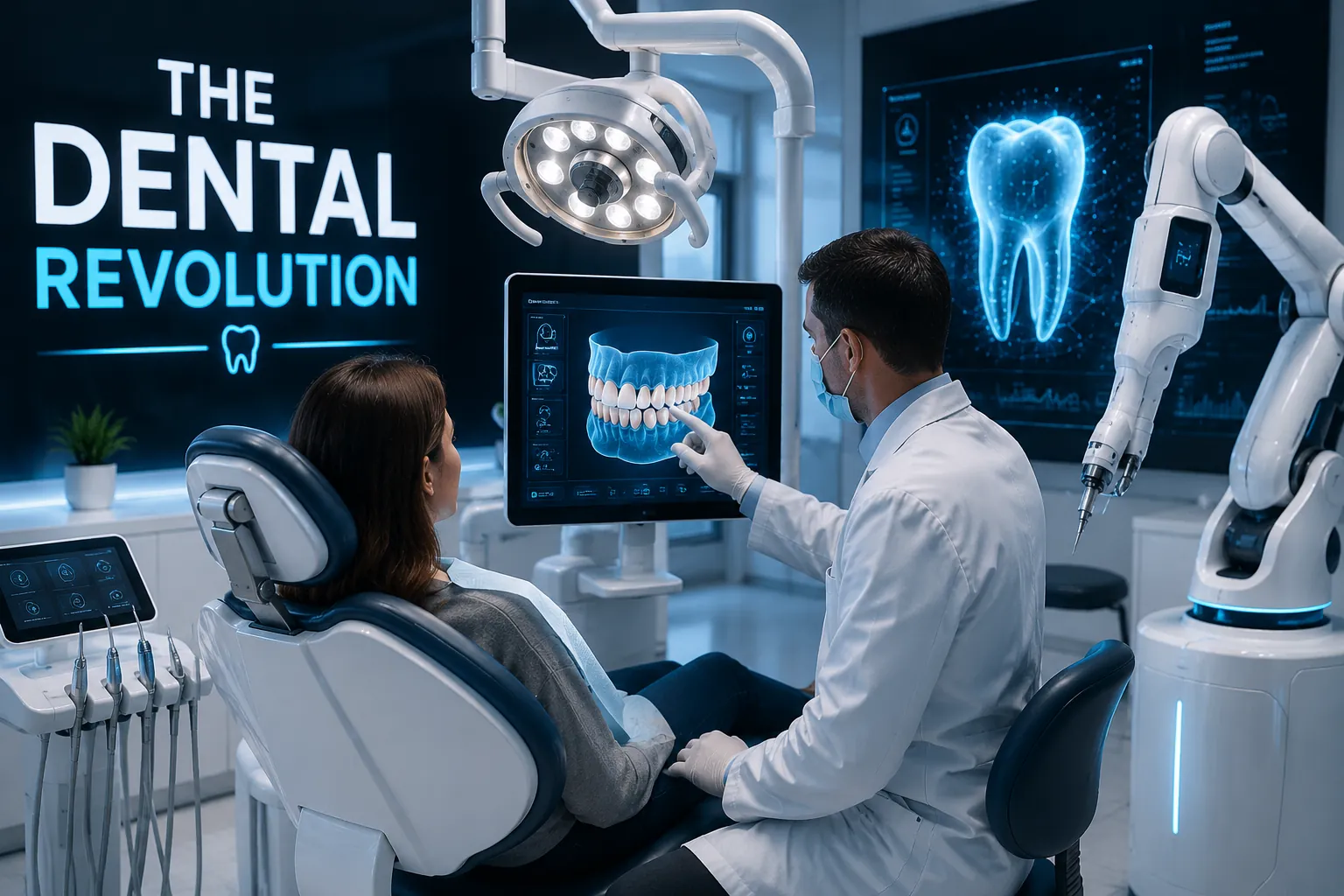
For over 150 years, the dental drill has been the defining instrument of the dentist's office, and the defining source of patient dread. The high-pitched whine. The vibration. The smell of burning enamel. Every generation has lived with it, assuming it is simply the price of a healthy mouth.
That assumption is now being dismantled in laboratories around the world. Researchers in Japan, the UK, and the United States are developing technologies that could make the drill genuinely obsolete within a decade. Some of these treatments are already in human trials. Others are on the edge of clinical approval. The pace of change in dentistry, long one of medicine's most static fields, has quietly become extraordinary.
Growing teeth back from stem cells
The most dramatic development comes from Kyoto University in Japan, where scientists have successfully regrown teeth in adult mice using antibodies that stimulate dormant tooth buds, the biological structures that grow your first set of teeth as a child. In 2024, the team moved into human trials, with initial results showing clear activation of tooth growth in individuals who had lost permanent teeth.
The treatment works by blocking a protein called USAG-1, which suppresses tooth growth after childhood. Inject the antibody, and the body essentially thinks it is growing a new tooth for the first time. For patients who lose teeth to decay or injury, this represents something genuinely new: a biological replacement that is grown by the body itself, perfectly fitted, and indistinguishable from a natural tooth.
If Phase 2 trials proceed on schedule, this treatment could reach the market in Japan by 2030 and globally by 2032. For dentistry, that is a big change comparable to what the polio vaccine was for infectious disease.
"We are not patching teeth anymore. We are rethinking what the mouth can do to heal itself."
Healing cavities without a drill
Even before tooth regrowth becomes routine, a simpler revolution is closer to arrival. Researchers at the University of Washington have developed a peptide-based gel called P11-4 that causes tooth enamel to remineralise, essentially healing early-stage cavities without any drilling at all.
The gel works by mimicking the proteins that originally form enamel, encouraging calcium and phosphate ions in saliva to crystallise directly into the damaged area. In clinical trials involving children with early cavity formation, a single treatment eliminated the cavities in 80% of cases. The gel requires no anaesthetic, causes no discomfort, and takes under ten minutes to apply.
A commercial version called Curodont Repair has already received regulatory approval in Europe and is in late-stage FDA review in the United States. Several UK dental practices have begun offering it privately. In the coming years, it is expected to become a standard first-line treatment before any drilling is considered.
Laser dentistry and the end of the needle
The drill is only one part of what makes dental visits unpleasant. The anaesthetic injection, that long needle going into the gum, is, for many patients, equally dreaded. Here too, technology is advancing rapidly.
Laser dentistry has existed for decades, but newer systems are precise enough to remove decayed tissue without heat or vibration, eliminating the need for anaesthetic in the majority of cavity treatments. The FDA has approved several systems for this purpose, and costs are falling as competition between manufacturers increases. By 2030, most modern dental practices in high-income countries are expected to have replaced their drills with laser systems for the majority of procedures.
Needle-free anaesthetic delivery is also advancing. A device called DentalVibe uses vibration to block pain signals during injections. Others use pressurised jets of liquid to deliver local anaesthetic through the skin without a needle. Neither eliminates discomfort entirely, but both significantly reduce the pain that keeps millions of people avoiding the dentist.
What this means for global oral health
Tooth decay is the most common chronic disease in the world. Over 3.5 billion people are affected. In low- and middle-income countries, access to even basic dental care is limited, meaning decay often goes untreated until it becomes an emergency. The arrival of simple, low-cost, drill-free treatments, particularly the remineralisation gels, which require minimal training to apply, could transform oral health in parts of the world where dentists are scarce.
The tooth regrowth treatment, when it arrives, will initially be expensive. But its trajectory is likely to mirror that of other biologics: high cost at launch, steady decline over a decade as production scales and competition grows. By the mid-2030s, dental implants, currently a $5,000 to $30,000 procedure in many markets, may be largely replaced by a treatment that costs a fraction as much.
The dentist is not disappearing
None of this means the dental profession is under threat. What it means is a profound shift in what dentists do. The mechanical, drill-and-fill model that has defined dentistry for generations will give way to a more biological and preventive practice, one focused on monitoring oral health, applying regenerative treatments, and managing the mouth as a window into overall systemic health.
Research continues to strengthen the link between oral health and conditions including heart disease, diabetes, Alzheimer's disease, and adverse pregnancy outcomes. A dental profession that moves away from reactive repair and toward proactive biological maintenance may ultimately do far more for human health than its drill-centric predecessor ever could.
This article is for general information only and is not medical advice. Talk to a qualified health professional about your own situation.
Related Posts

Japan is testing a drug that grows back your teeth. Human trials started in 2026
A Japanese biotech company has started human trials for a drug that can grow back lost teeth from the root up.
Scientists in Germany just created a gel that grows back your joint cartilage, and no surgery is needed
Millions of people live with painful, damaged joints and are told there is no fix. German scientists just proved that wrong with a gel that restores cartilage naturally.
Comments
Loading comments…