
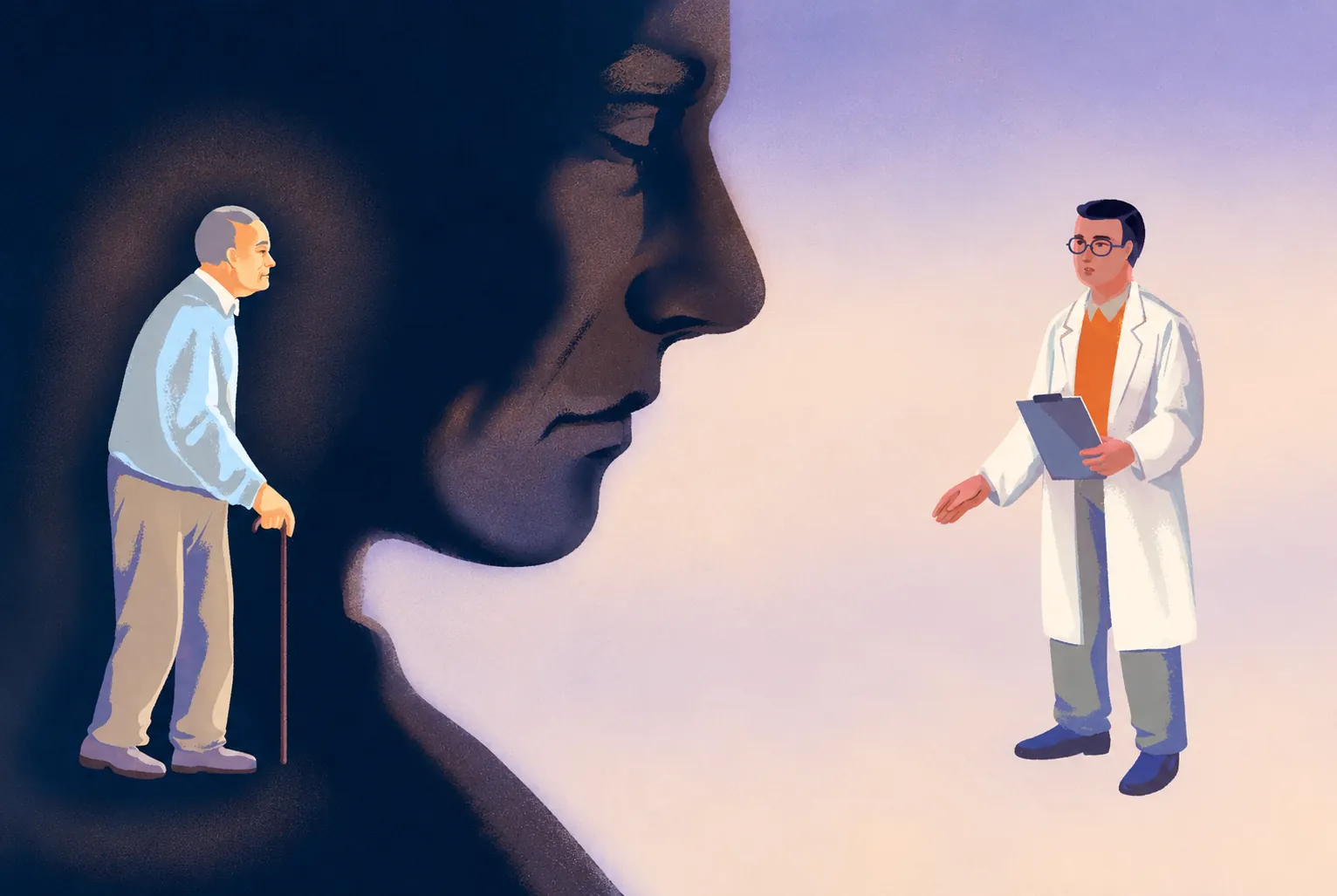
There are now approximately 600,000 centenarians, people aged 100 or older, alive in the world. By 2050, the UN projects that number will exceed 3.7 million. They are the fastest-growing age demographic on earth, and they have become the most intensively studied group in the history of longevity research.
What scientists have found by studying these individuals is not what most people expect. The patterns are counterintuitive, occasionally baffling, and deeply revealing about what actually drives biological aging, and what does not.
Genetics matter less than you think
The assumption that exceptional longevity is primarily genetic, that you either have the genes for it or you do not, has been substantially revised by recent research. Twin studies, which compare the lifespan of identical twins raised in different environments, suggest that genetics accounts for roughly 25% of the variation in human lifespan. The remaining 75% is determined by environment, behaviour, and factors that are, in principle, modifiable.
This finding is consistently supported by centenarian studies. Most people living past 100 do not have dramatically unusual genetics. What they share, more consistently, is a cluster of behavioural and environmental patterns, patterns that researchers have been able to identify with increasing precision.
The Blue Zone findings: and what came after
The concept of Blue Zones, geographic regions with unusually high concentrations of centenarians, including Sardinia (Italy), Okinawa (Japan), Nicoya (Costa Rica), Icaria (Greece), and Loma Linda (California), popularised the idea that longevity was tied to specific lifestyles. The original research identified nine common factors: plant-heavy diet, moderate physical activity, low stress, strong social connections, clear sense of purpose, moderate alcohol consumption, smoke-free living, religious or spiritual community, and family commitment.
More recent research has both confirmed and complicated this picture. A 2023 study at UC San Diego found significant errors in the centenarian data for several Blue Zone regions, suggesting that some of the longevity clusters may partly reflect poor birth record keeping rather than genuine biological age. This does not invalidate the lifestyle findings, but it introduces important uncertainty about how extraordinary the longevity in these regions actually is.
"The most consistent predictor of reaching 100 is not diet or exercise. It is the complete absence of chronic psychological stress over decades."
What the biology actually shows
At the cellular level, aging is driven by several interacting processes: the shortening of telomeres (protective caps on chromosomes), the accumulation of senescent cells (old cells that stop dividing but don't die, releasing inflammatory signals), mitochondrial dysfunction, and epigenetic changes that alter how genes are expressed over time.
Centenarians show distinctive patterns across several of these mechanisms. They tend to have longer telomeres than age-matched peers, lower levels of chronic inflammation (a condition researchers call "inflammaging"), and more efficient DNA repair mechanisms. These are not simply genetic advantages, they appear to be maintained by lifestyle factors, particularly exercise, diet, and stress management.
The role of the microbiome, the community of bacteria living in the gut, has emerged as one of the most significant recent findings. A 2021 study published in Nature Aging found that centenarians have a distinctively diverse gut microbiome, with high levels of specific bacteria associated with the production of secondary bile acids. These compounds appear to protect against the gut-derived inflammation that drives many age-related diseases. The microbiome is modifiable through diet, and this finding has given dietary research a new mechanistic framework.
The drugs targeting aging itself
For the first time in history, researchers are testing drugs designed not to treat individual diseases of aging but to target the aging process itself. Rapamycin, an immunosuppressant used in organ transplantation, has been shown to extend healthy lifespan in mice by 25% even when given in middle age. Human trials are underway. Metformin, a common diabetes drug, is the subject of the TAME trial, the largest study ever conducted specifically to test whether a drug can delay the onset of age-related disease in healthy adults. Results are expected by 2027.
Senolytics, drugs that selectively clear senescent cells, have shown striking results in animal models and are in early human trials. Dasatinib and quercetin, the most studied senolytic combination, have reduced markers of aging in small human studies. These are early results from small samples. But the direction of travel is clear: interventions that directly target biological aging mechanisms are moving from theory to clinical testing at an accelerating pace.
What you can actually do today
The research does not yet support taking any anti-aging drug outside of a clinical trial. What it does strongly support is the following, with a degree of evidence that is now overwhelming: regular moderate exercise (the single most consistently supported longevity intervention in all of the research), a diet rich in whole plant foods and low in ultra-processed food, maintaining strong social connections throughout life, avoiding smoking, keeping chronic stress at manageable levels, and sleeping 7 to 9 hours per night.
None of this is new. What is new is the mechanistic understanding of why it works, and the growing conviction among researchers that the ceiling of human healthspan is much higher than the current average would suggest. The question longevity science is now asking is not simply how long we can live, but how healthy and functional we can remain for how long. The answers, emerging from centenarian research, suggest the gap between the current average and the possible optimum is much larger than we previously appreciated.
This article is for general information only and is not medical advice. Talk to a qualified health professional about your own situation.
Related Posts

Japan is testing a drug that grows back your teeth. Human trials started in 2026
A Japanese biotech company has started human trials for a drug that can grow back lost teeth from the root up.
Scientists in Germany just created a gel that grows back your joint cartilage, and no surgery is needed
Millions of people live with painful, damaged joints and are told there is no fix. German scientists just proved that wrong with a gel that restores cartilage naturally.
Comments
Loading comments…