
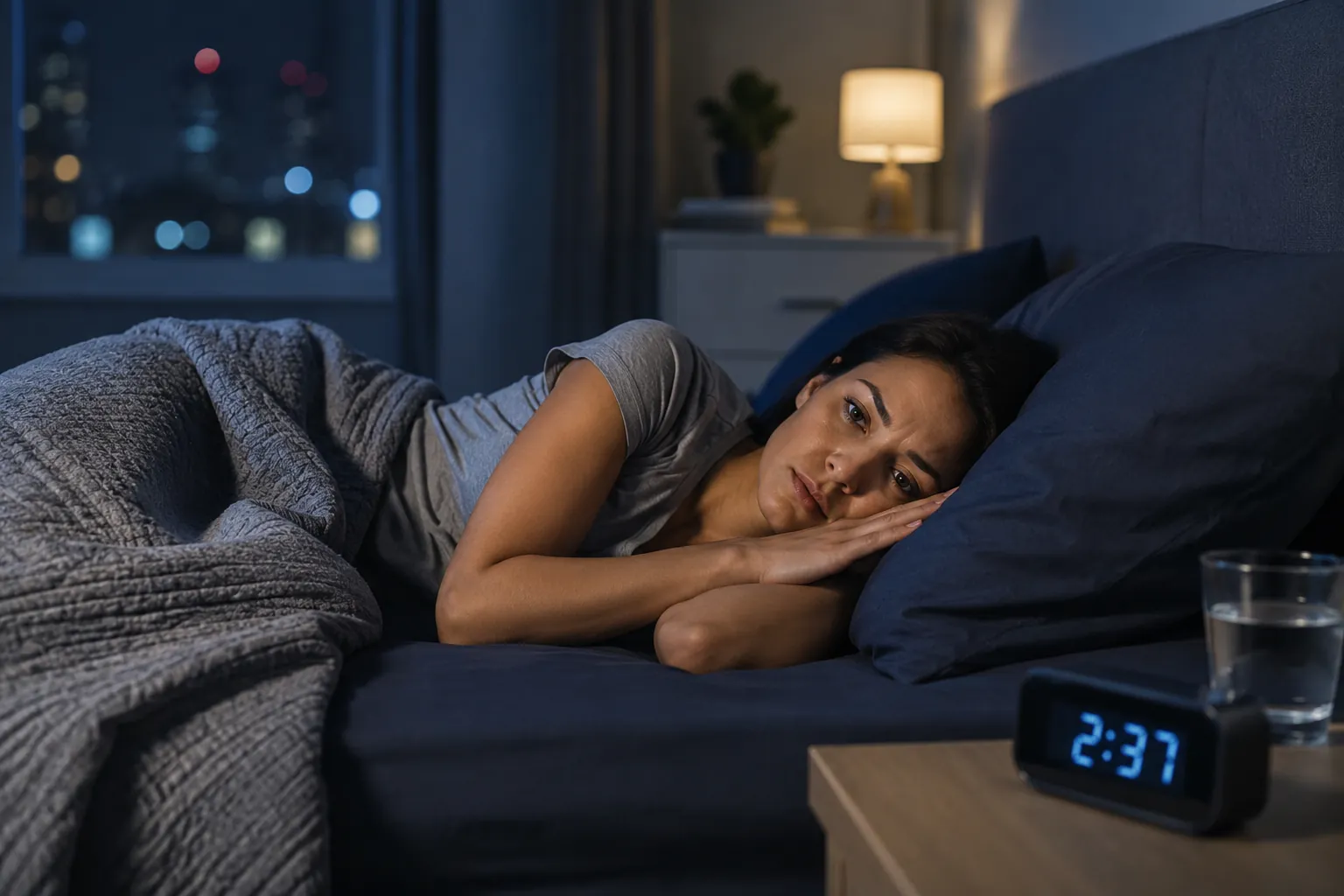
In 1942, the average American slept 7.9 hours per night. By 2024, that figure had fallen to 6.5 hours. The trend is similar across every industrialised nation. Japan, South Korea, the UK, Germany, and Brazil have all recorded significant declines in average sleep duration over the past 50 years. The cause is not biological, humans have not changed. The cause is the progressive colonisation of the night hours by work, screens, anxiety, and a cultural attitude that treats sleep deprivation as a mark of productivity.
The consequences of this shift, documented by decades of research across millions of subjects, are severe enough that Matthew Walker, a neuroscience professor at UC Berkeley and the world's most prominent sleep researcher, has called insufficient sleep "the greatest public health challenge we face in the 21st century." That is a large claim. The evidence behind it is larger still.
What sleep deprivation actually does to your body
After just one night of sleeping six hours instead of eight, the number of natural killer cells, a critical part of the immune system's cancer defence, drops by 70%. A study of 11 million people across 20 countries found that sleeping six hours or less was associated with a 24% higher risk of early death compared to sleeping seven to nine hours. Short sleep is associated with significantly increased risk of heart attack, stroke, type 2 diabetes, and obesity.
The Alzheimer's link is particularly striking. During sleep, the brain activates the glymphatic system, a biological waste-clearance mechanism that flushes toxic proteins, including amyloid beta and tau, the hallmarks of Alzheimer's disease, from the brain. Chronic sleep deprivation impairs this cleaning process, allowing these proteins to accumulate. Studies following tens of thousands of people over decades find that those who consistently sleep less than six hours in midlife have a 30% higher risk of developing dementia in later life.
"No aspect of our biology is left unscathed by sleep deprivation. It permeates every nook and cranny of our physiology and psychology."
Why we are sleeping less: the structural causes
Artificial light, particularly the blue-wavelength light emitted by LED screens, suppresses the production of melatonin, the hormone that signals to the brain that it is time to sleep. A 2014 Harvard study found that reading on an iPad before bed delayed sleep onset by nearly an hour compared to reading a printed book, reduced REM sleep, and caused subjects to feel less alert the following morning even after eight hours in bed.
Work culture is the second structural driver. A survey of over 25,000 workers across Europe and North America found that 40% regularly worked beyond their contracted hours and that work-related anxiety was the most commonly cited cause of waking in the night. The always-on nature of digital work, the email that arrives at 11pm, the message that feels urgent, has extended the working day into what was previously biological recovery time.
Caffeine consumption, which is rising globally, worsens the situation. Caffeine has a half-life of approximately five to seven hours, meaning that a coffee consumed at 3pm still has 50% of its stimulant effect in your system at 8pm. A quarter of a cup of caffeine remains active at midnight. Most people significantly underestimate how much caffeine is affecting their sleep.
What actually works
The sleep science literature is consistent on the most effective behavioural interventions. A fixed wake time, getting up at the same time every day, including weekends, is the single most powerful regulator of the circadian rhythm. A cooler bedroom (around 18°C or 65°F) helps the drop in core body temperature that the brain requires to initiate deep sleep. Avoiding screens for 60 minutes before bed, or using blue-light filtering software and glasses, reduces melatonin suppression. Avoiding alcohol, which many people use as a sleep aid but which fragments sleep architecture and suppresses REM, is consistently supported by the data.
Cognitive Behavioural Therapy for Insomnia (CBT-I) is now the gold-standard treatment for chronic insomnia, outperforming sleeping pills in long-term outcomes across every clinical trial that has compared them. Unlike sleeping pills, it has no side effects and its benefits persist after treatment ends. It is available digitally, at low cost, and is increasingly covered by health insurance in countries that have reviewed the evidence.
The cultural shift that is needed
None of the above interventions will make a dent on population-level sleep deprivation unless they are matched by a cultural change in how sleep is regarded. A society that celebrates working until 2am and mocks people who prioritise sleep will produce exactly the health outcomes the research predicts. The reframing required, treating sleep not as laziness but as one of the most powerful health interventions available, is underway in some quarters but remains far from mainstream.
Some companies have begun taking this seriously. Aetna, the US health insurer, pays employees a cash bonus for every night they log more than seven hours of sleep. Several major Japanese corporations have introduced mandatory rest periods. These are early, incomplete steps, but the direction is right. Sleep is not a luxury. For the evidence-based management of human health, it may be the single most important factor of all.
This article is for general information only and is not medical advice. Talk to a qualified health professional about your own situation.
Related Posts

Japan is testing a drug that grows back your teeth. Human trials started in 2026
A Japanese biotech company has started human trials for a drug that can grow back lost teeth from the root up.
Scientists in Germany just created a gel that grows back your joint cartilage, and no surgery is needed
Millions of people live with painful, damaged joints and are told there is no fix. German scientists just proved that wrong with a gel that restores cartilage naturally.
Comments
Loading comments…