
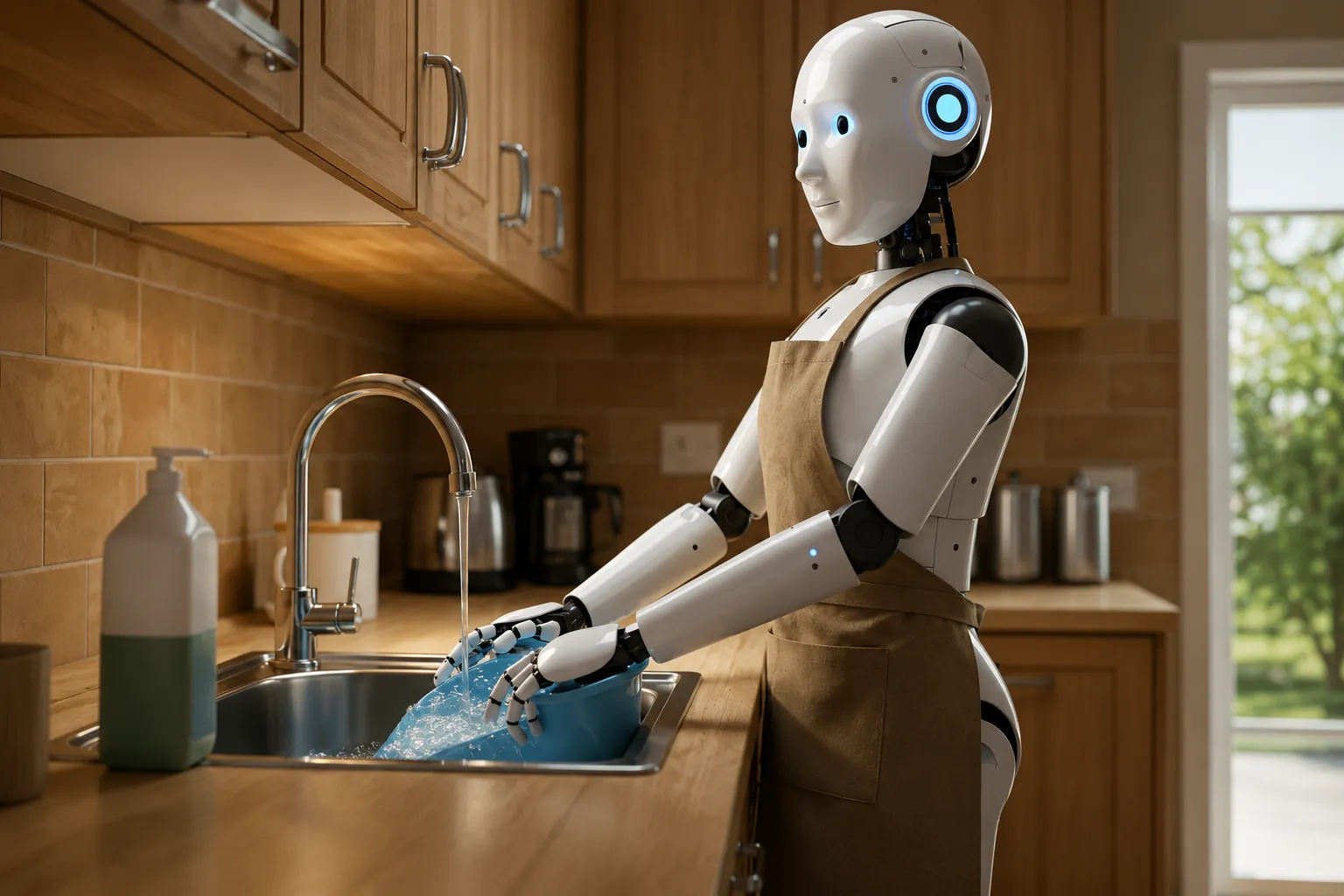
For most of the twentieth century, robots meant one thing: car manufacturing. The image was a fixed industrial arm welding metal in a sealed factory, doing a repetitive task no human would want to do. It was big in its sector but largely invisible to ordinary life. The robotics wave now underway is different in character. The machines are moving into spaces where people live, work, and are cared for, and they are doing it faster than any previous wave of industrial automation.
In hospitals: surgery, logistics, and care
Surgical robots have been in operating theatres since the early 2000s, but the technology has matured dramatically. The da Vinci Surgical System, the most widely deployed, is now used in over six million procedures per year globally, offering surgeons precision that human hands cannot match and enabling minimally invasive approaches for operations that previously required large incisions.
The next generation goes further. Autonomous robots capable of performing specific surgical tasks without continuous human guidance are in advanced trials. Systems developed at Johns Hopkins and University College London can already perform certain soft-tissue procedures, bowel anastomosis, for example, with accuracy exceeding that of experienced surgeons. Full surgical autonomy is still years away, but partial autonomy for defined sub-tasks is arriving now.
Hospital logistics is already being transformed. Autonomous delivery robots, navigating corridors, using lifts, delivering medications and samples, are operating in hospitals across the US, Europe, and Asia. They reduce the time nursing staff spend on non-clinical tasks and significantly cut delivery errors. Companies including Aethon, Swisslog, and Agilox have deployed thousands of units. Within five years, most large hospitals in high-income countries are expected to run some form of autonomous logistics system.
"The robot in the operating theatre is not replacing the surgeon. It is giving the surgeon capabilities no human hand could have on its own."
In factories: adaptive robots that learn
Industrial robotics is entering its second wave. The first wave automated predictable, high-volume tasks. The second wave, powered by machine learning and improved sensor technology, is automating variable tasks that previously required human judgment. Robots that can handle different products on the same assembly line, adjust to irregularly shaped components, or identify and discard defective items by sight are now commercially deployed across electronics, food processing, pharmaceuticals, and logistics.
Amazon operates over 750,000 robots across its fulfilment network. The company's new generation of Sequoia robots can identify and move individual items from storage pods up to 75% faster than previous systems. The economic pressure to automate is intensifying as labour costs rise globally and the technology cheapens. A robot arm that cost $100,000 in 2010 can now be purchased for under $15,000. The break-even point against human labour has fallen below the level where most manufacturers can ignore it.
In your home: closer than you think
Domestic robots have been promised for decades without delivering much beyond the Roomba. That is now changing. A new generation of general-purpose home robots, designed to handle multiple tasks in unstructured domestic environments, is reaching commercial launch.
Figure AI, 1X Technologies, and Apptronik have all shipped early commercial units capable of navigating domestic spaces, picking up objects of varying shapes and weights, and performing tasks including loading dishwashers, folding laundry, and carrying groceries. These are not yet reliable enough for mass consumer deployment, they work in controlled environments better than in the chaos of a real kitchen. But the improvement curve is steep. Analysts at ARK Invest project that general-purpose home robots will reach a price point of under $20,000 by the early 2030s, expensive, but comparable to a car.
The demographic driver here is significant. Aging populations in Japan, South Korea, Germany, and much of Southern Europe face a structural shortage of care workers. Robots capable of assisting elderly people with daily tasks, medication reminders, mobility assistance, fall detection, are not a luxury. They are a necessity for societies that cannot produce enough human caregivers to meet projected demand.
The concerns worth taking seriously
Not all the implications of the robotics wave are positive. Job displacement, covered in detail in a separate article, is the most immediate concern. But there are others. Autonomous systems making consequential decisions about human health or safety raise liability questions that existing legal frameworks are not equipped to resolve. A surgical robot that causes harm: who is responsible, the hospital, the surgeon, the manufacturer, the software developer?
Data privacy is another live issue. Home robots necessarily collect enormous amounts of data about domestic life. Who owns that data, how it is stored, and what it can be used for are questions that consumers and regulators have barely begun to address.
These are real problems. But they are problems arising from an immensely powerful technology that will arrive regardless of whether the problems are solved first. The more useful question is not whether to allow robotics but how to govern it, and that conversation is only just beginning.
Related Posts

Why is there liquid inside a coconut? The answer is stranger than you think
You crack open a coconut and liquid pours out. The real answer involves biology, evolution, and a survival trick millions of years in the making.

Blue Moon vs Red Moon Explained: What They Actually Are
What is a blue moon, and does it actually look blue? What makes a moon turn red? A clear, science-based explanation of two of the most misunderstood events in the night sky.

The space economy: how space is about to affect your daily life
Satellites, asteroid mining, and orbital manufacturing are no longer science fiction. They are business plans.
Comments
Loading comments…