In January 1994, the White House launched its first website. It was a single page with a brief welcome message and a small photograph. There was no search bar. There were no links to other pages. It was a curiosity, viewed by a tiny number of people using dial-up connections that made a shrieking noise when they connected. You could not buy anything with it, stream anything with it, or communicate with anyone through it.
Thirty-one years later, the internet is the infrastructure of modern civilisation. It carries global banking, global communication, global trade, global news, global entertainment, global scientific collaboration, and the daily personal lives of over five billion people. If the internet went dark tomorrow, the world economy would begin to collapse within hours. It is not an exaggeration to say that the internet is the most transformative technology ever adopted by human society in the shortest period of time.
Here is what that transformation actually looks like, in numbers and specifics, across the areas of life it has changed most fundamentally.
The Numbers: From Almost Nobody to Almost Everybody
In 1995, approximately 16 million people worldwide used the internet, representing about 0.4% of the global population. The experience of "going online" meant connecting via a dial-up modem at speeds of around 28.8 kilobits per second, slow enough that a single photograph could take several minutes to download. Most internet access was text-based. The World Wide Web, invented by Tim Berners-Lee at CERN in 1989 and opened to the public in 1991, was still in its infancy as a graphical, browsable medium.
By 2000, the number had grown to approximately 400 million. By 2010, to 2 billion. By 2020, to 4.5 billion. According to data from the International Telecommunication Union (ITU) and DataReportal, the number of internet users worldwide reached approximately 5.4 billion by early 2026, representing about 67% of the global population. This means that in roughly 30 years, a technology used by virtually nobody became used by two thirds of humanity.
Mobile internet access, driven by the spread of smartphones from the late 2000s onwards, was the key driver of the most recent growth. In 2007, Apple launched the iPhone, the first commercially successful smartphone with a full browser and third-party app support. By 2026, there are approximately 7.3 billion active mobile connections worldwide, more than the global population, because many people in developed countries carry multiple SIM cards. Mobile internet is now the primary way most people in developing countries access the web, with billions of people whose first and only internet connection has always been through a mobile phone.
Commerce: Trillions of Dollars Moved Online
In 1995, buying something online was an unusual and slightly risky act. Amazon launched in July 1995 as an online bookstore. eBay launched in September 1995 as a person-to-person auction site. The concept of entering your credit card number into a website was treated with significant suspicion by most consumers. Most purchases still required physical presence: you went to a shop, chose something, paid in cash or by card, and took the item home.
By 2025, global e-commerce retail sales exceeded $6.3 trillion, according to estimates from eMarketer, representing approximately 20% of all retail sales worldwide. In some categories, online purchasing has become the clear majority channel. Books, music, and video games are now predominantly sold digitally or through online retailers. Travel bookings are dominated by online platforms. Fashion retail has shifted dramatically toward online purchases, driving the closure of thousands of physical stores across North America and Europe.
The shift to digital payments has been equally dramatic. Mobile payment platforms (Alipay, WeChat Pay, Google Pay, Apple Pay, M-Pesa in Africa) now process billions of transactions daily. In China, mobile payments via Alipay and WeChat Pay have largely displaced cash in urban areas. Kenya's M-Pesa, launched in 2007, brought mobile money transfers to millions of people who had no access to traditional banking, a model that has since been replicated across sub-Saharan Africa and other developing regions.
Communication: From Letters to Instant Global Messaging
Before email became common in the 1990s, business communication relied on postal mail, fax machines, and telephone calls. International communication was expensive by the minute. A phone call from London to New York in 1990 cost approximately 40 pence per minute at off-peak rates; at peak rates considerably more. Writing a letter to a colleague in another country meant waiting a week or more for a response.
Email transformed business communication first, then personal communication. By the early 2000s, email had become the standard tool for most professional correspondence. By the early 2010s, mobile messaging apps began to displace email for informal communication. WhatsApp, launched in 2009 and acquired by Facebook (now Meta) in 2014 for $19 billion, currently has approximately 2.78 billion monthly active users globally. It is the primary communication tool for hundreds of millions of people in India, Brazil, Mexico, Indonesia, and across Africa and the Middle East.
The cost of international communication has dropped from several pounds or dollars per minute to effectively zero. A video call from London to Mumbai, which in 1995 would have cost a significant sum, is now free via WhatsApp, FaceTime, Zoom, or Google Meet. This has transformed both personal relationships across distance and business structures, making it practical for companies to employ workers and coordinate teams across multiple countries without those people ever sharing a physical office.
Information and Knowledge: The World's Library in Your Pocket
Before the internet, access to information was limited by physical proximity to libraries, bookshops, and experts. A researcher in London had access to the British Library, one of the largest in the world. A researcher in a small town in rural India or rural Brazil had access to whatever happened to be in the local school library, which might be very little. The information gap between people in wealthy, well-resourced locations and people in poor, remote locations was enormous.
Wikipedia, launched in January 2001, now contains over 65 million articles in 328 languages, written and maintained by volunteers, freely accessible to anyone with an internet connection. As of 2026, it receives approximately 1.8 billion unique device visits per month and is among the ten most visited websites on Earth. Its limitations are real and well-documented (articles vary significantly in quality and can be edited with errors), but as a free repository of encyclopaedic information available in dozens of languages to anyone in the world, it has no historical parallel.
Google Search, launched in 1998, processes approximately 8.5 billion search queries per day, according to 2023 estimates. This means humanity collectively turns to a single search service roughly 8.5 billion times each day to answer questions, find information, and navigate the world. The phrase "just Google it" has entered everyday speech across dozens of languages as a description of the baseline method of answering any factual question.
Media: The Collapse of Old Industries and the Rise of New Ones
The internet's impact on media industries has been among the most dramatic of any sector. Newspapers, which had dominated the information economy for centuries, saw their advertising revenues collapse as classified advertising moved to Craigslist and later to Facebook Marketplace and other online platforms, while display advertising shifted toward Google and social media. US newspaper advertising revenue fell from approximately $49 billion in 2000 to under $8 billion by 2023, according to the Newspaper Association of America and subsequent industry data. Thousands of local newspapers have closed in the United States, the United Kingdom, and other countries.
Music industry revenue from recorded music fell from approximately $24 billion globally in 1999 to under $7 billion by 2014, driven by piracy and then by the shift to streaming. Spotify, launched in Sweden in 2008, has since rebuilt streaming revenue to approximately $15 billion annually by 2024, but the industry structure is entirely different: album sales as a revenue model have been replaced by per-stream payments.
Streaming video has transformed television. Netflix, which began as a DVD-by-mail service in 1997 and launched its streaming service in 2007, had over 300 million paying subscribers globally by early 2026. Traditional broadcast television audiences have declined consistently across all developed markets since the late 2000s.
Health and Medicine: Information, Access, and Telemedicine
The internet has changed healthcare in complex ways that include both significant benefits and genuine risks. On the benefit side, access to accurate medical information has improved dramatically for patients who previously had little ability to research their own conditions. Telemedicine, accelerated significantly by the COVID-19 pandemic, now allows patients in remote areas to consult specialists they would otherwise have no access to. Electronic health records, when properly implemented, reduce medication errors and improve coordination between healthcare providers. Research collaboration across institutions and across borders is dramatically easier, accelerating the pace of scientific discovery.
The risks are also real. Health misinformation spreads faster and more widely online than accurate medical information in many documented cases. The COVID-19 pandemic demonstrated on a global scale how quickly false medical claims could reach and influence millions of people via social media, with measurable consequences for vaccination rates and public health behaviour.
What Has Not Changed
Despite the scale of the transformation, certain things have remained remarkably constant. The internet has not eliminated inequality. It has in many ways reflected and sometimes amplified existing economic and social inequalities, directing information, opportunity, and wealth toward those already positioned to access and benefit from them. The 33% of the global population still without regular internet access in 2026 are disproportionately concentrated in sub-Saharan Africa, South Asia, and rural communities globally.
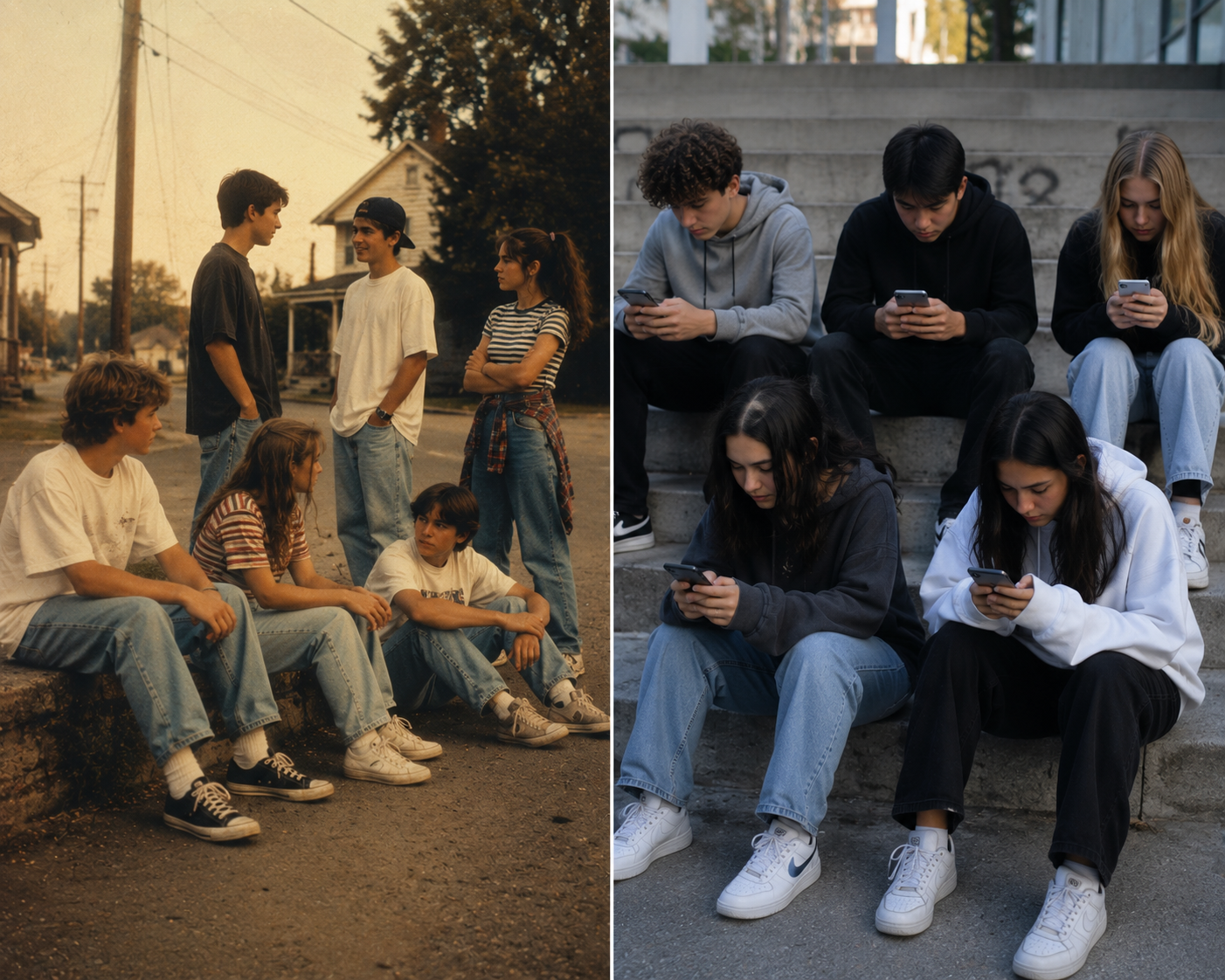
Human psychology has also remained constant. People still seek community, validation, entertainment, and meaning. The internet has provided new venues for these needs without changing the underlying needs themselves. Social media, which many observers hoped would produce a more informed and connected global citizenry, has in many documented cases reinforced division, shortened attention spans, and created new forms of social anxiety. The technology is neutral; the human impulses it amplifies are not always the best ones.
What Comes Next
The next phase of the internet's development is already underway. Artificial intelligence is shifting from a specialised research tool to a general-purpose layer embedded in everything from search to healthcare to education. The number of internet-connected devices (the "Internet of Things") already exceeds 15 billion and is projected to surpass 30 billion by 2030. Satellite internet constellations (Starlink, OneWeb, and others) are bringing high-speed connectivity to areas that terrestrial infrastructure has never reached.
The 25-year transformation described in this article is almost certainly not the largest or most consequential transformation the internet will produce. It may only be the beginning.